


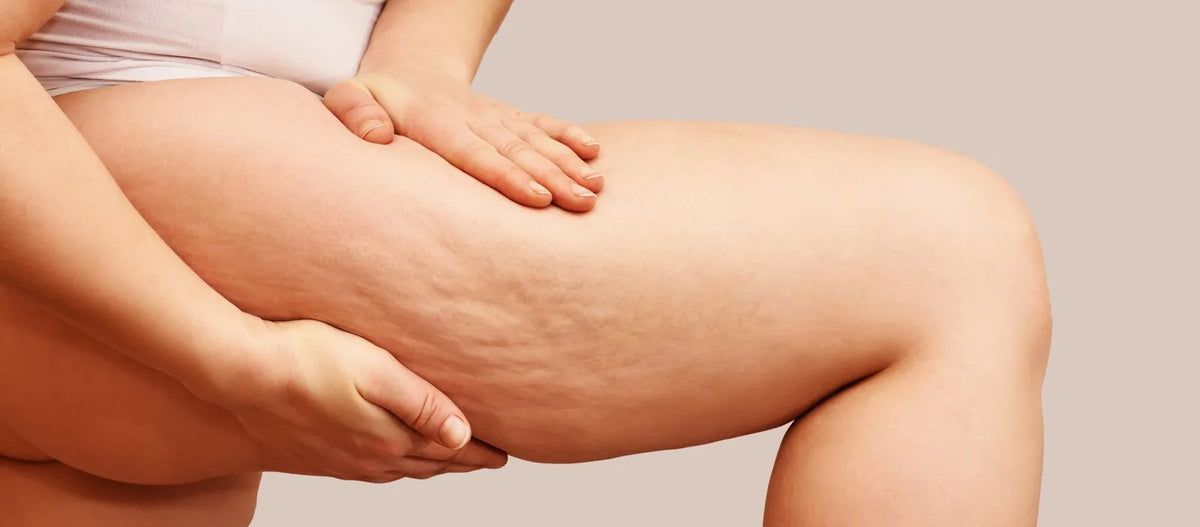
Cellulite on Legs and Thighs: What Causes It and How to Get Rid of It
Cellulite on legs and thighs affects around 90% of women at some point, whatever their weight, fitness level or body composition. It is a structural problem in the connective tissue beneath the skin, which is why diet and exercise alone rarely get rid of it. The dimpled texture on the thighs, the back of the legs and the buttocks forms when fat cells push through weakened collagen bands, and it looks worse when fluid builds up in the tissue around them.
GUAM has made marine skincare in Italy since 1986, founded by Egidio Siena and built on seaweed harvested off the coast of Brittany. In a 2024 clinical study, women using our FIR seaweed mud wrap saw 81% fewer cellulite nodules after 8 wraps in 4 weeks.
This guide covers what is actually happening in the skin, what helps each area (back of thighs, outer thighs, inner thighs and calves), and what a realistic routine to reduce cellulite on legs at home looks like.
What Causes Cellulite on Legs and Thighs
Cellulite on the thighs and legs is structural, not just cosmetic. The skin over the legs has a specific connective tissue arrangement: fat cells sit in vertical chambers separated by collagen bands that run at a right angle to the skin surface. A pathophysiology review in Dermatologic Surgery links the high rate of cellulite in women to sex-specific differences in skin and fat tissue anatomy, with the connective tissue bands and fat pushing into the skin as the main drivers.
In women, these chambers are larger and more vertical than in men, so fat cells push through the collagen bands more easily when they enlarge or when the collagen weakens. The result is the dimpled, orange-peel texture on the outer thighs, inner thighs, backs of the legs and buttocks.
Poor microcirculation
The skin over cellulite-prone areas on the thighs is often colder than the surrounding tissue, a sign of reduced blood flow in the tiny capillaries. When microcirculation is sluggish, less oxygen reaches the skin, collagen repair slows, and fluid collects between the cells.
That retained fluid makes the dimples stand out. It is why cellulite on legs looks worse in the evening after long periods of sitting or standing.
Hormonal influence
Estrogen promotes fat storage in the lower body and affects how the connective tissue is arranged. When levels fluctuate or decline, collagen production drops and the skin's support weakens.
This is why cellulite often appears or gets worse at puberty, during pregnancy and around menopause, whatever your weight. The cellulite research literature describes these hormone-driven changes in skin structure as central to why cellulite shows up almost only in women after puberty.
Fluid retention
Fluid between the cells builds up when the lymphatic system is not draining well, and the legs are hit hardest because fluid pools downward. It adds pressure on the fat cells and pushes them harder against the collagen bands.
Draining that fluid is one of the fastest ways to visibly improve cellulite on legs. It does not remove cellulite structurally, but it removes the water layer that makes it look worse. More on this in our guide to water retention in thighs.
Genetics and age
Your genes set your baseline collagen density, fat distribution and lymphatic efficiency. Age speeds things up: collagen production declines by about 1% a year from your mid-20s and drops faster after hormonal changes.
The skin gets thinner and less elastic, so cellulite on the back of the thighs and inner legs often becomes more noticeable from the late 30s onward.
How to Get Rid of Cellulite on Legs: Our Picks
Each product works on a different part of the same problem. Most women start with the wrap, add the daily cream, then use the leggings and oil to keep results going. See all GUAM body wraps.
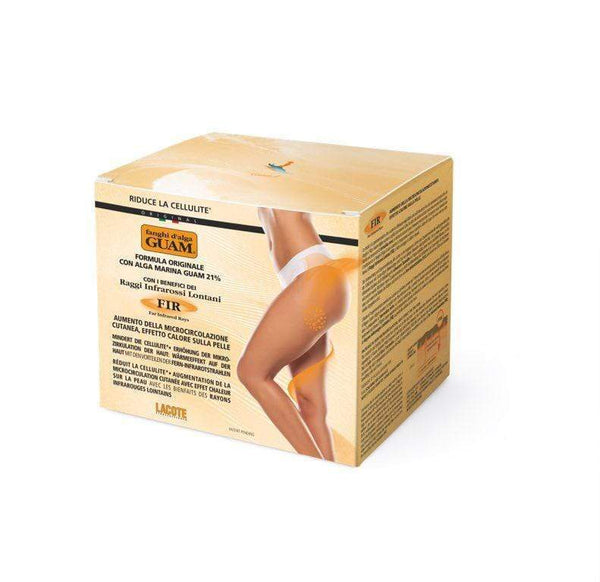
FIR Seaweed Mud Body Wrap for Cellulite on Thighs
For dimpled thighs, buttocks and the back of the legs. This is the FIR seaweed mud tested in the 2024 clinical study. The GUAM Seaweed Body Wrap with Infrared Heat combines brown seaweed (Laminaria and Fucus), marine clay and Black Tourmaline, a mineral that turns body heat into gentle far infrared (FIR) warmth.
- 81% fewer nodules in 4 weeks (2024 study)
- Drains retained fluid
- Boosts microcirculation
- 45 minutes, 2 to 3 times a week
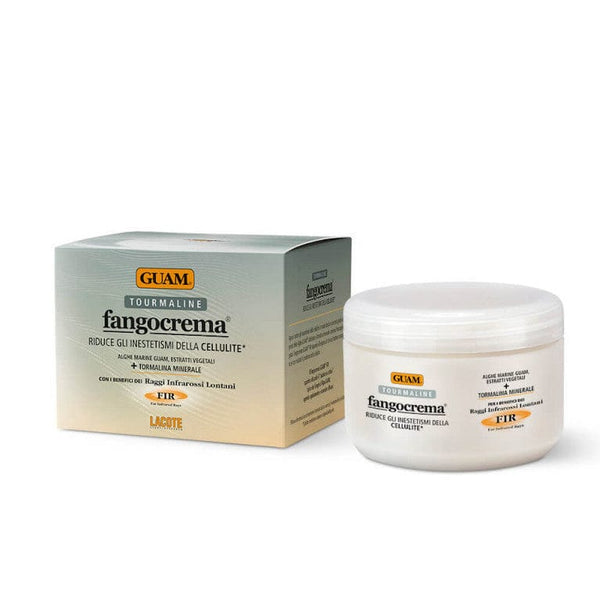
Fangocrema Tourmaline Cream for Legs and Thighs
For daily care between wraps. Fangocrema Tourmaline combines caffeine, GUAM seaweed extract and Black Tourmaline in a no-rinse cream that keeps the skin warm and active. Caffeine helps release stored fat; the tourmaline gives the same FIR warmth as the wrap.
- Leave-on, no rinsing
- FIR warmth from tourmaline
- Massage upward, knee to hip
- Bestselling GUAM cream
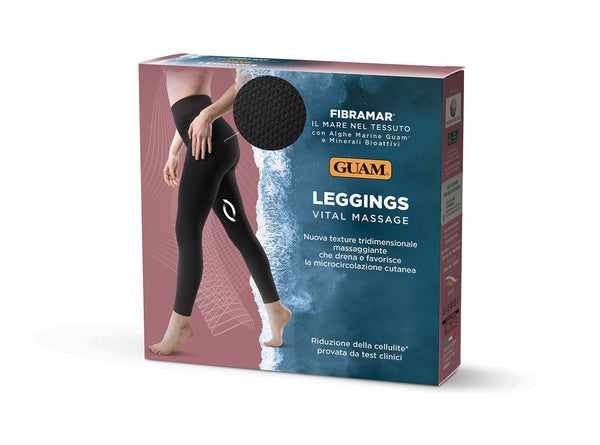
Vital Massage Anti-Cellulite Leggings
For easy, hands-off care. GUAM Vital Massage Leggings have bioactive minerals woven into the yarn that return body heat as far infrared warmth, plus GUAM marine algae microcapsules and a 3D massaging texture that works as you move.
- Wear about 6 hours a day
- Massaging 3D texture
- Algae microcapsules in the yarn
- Wash at 40C max, no softener
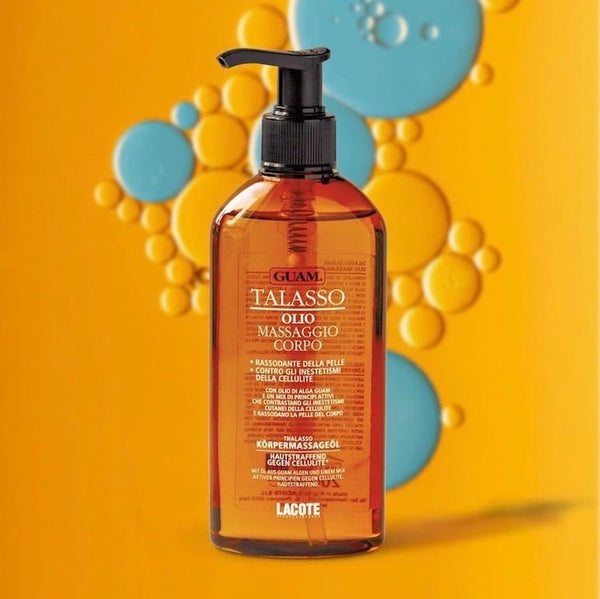
Thalassotherapy Anti-Cellulite Massage Oil
For drainage massage on legs that feel heavy. The Thalassotherapy Massage Oil blends GUAM brown seaweed with andiroba, avocado, grapefruit and rice bran oils, giving the slip you need for proper upward massage. Fast-absorbing and non-greasy.
- Supports lymphatic drainage
- Lighter, smoother-looking legs
- 3 to 5 minutes per leg
- Leaves no residue on clothes
Why Diet and Exercise Don't Get Rid of Cellulite on Legs
Exercise improves muscle tone and overall body composition, but it does not repair the collagen structure of the skin where cellulite forms. Losing body fat shrinks the fat cells, which can help, but it does not fix the weakened collagen bands or the poor microcirculation.
In one study of women who lost weight, cellulite actually got worse in about a third of them (Smalls 2006), because the skin did not tighten as the fat went. More in our guide on whether cellulite goes away with weight loss.
That does not mean exercise is wasted. Strong muscle under the skin makes the surface look smoother, and movement keeps fluid flowing. Try these exercises for cellulite on legs. The treatments that visibly change cellulite on the thighs work on the skin itself: the collagen, the microcirculation and the trapped fluid.
Cellulite on Thighs, Calves and the Back of the Legs: What Helps Each Area
Cellulite does not look or behave the same everywhere on the legs. Knowing why your problem area is different helps you choose what to use and how long to give it.
| Area | Why it forms there | What helps most | Visible change |
|---|---|---|---|
| Back of the thighs | Pressure from sitting, slow circulation, fluid pooling | Seaweed mud wrap + upward massage | Fastest: often 4 to 6 wraps |
| Front of the legs | Loose skin or lost muscle tone, fluid above the knee | Quad exercises + daily firming cream | 3 to 6 weeks |
| Outer thighs | Estrogen-driven fat storage ("saddlebags") | Wrap + daily FIR cream | 2 to 4 weeks |
| Inner thighs | Thin skin, low circulation, laxity | Gentle firming cream, no strong heat | Slowest: 8 to 12 weeks |
| Calves and knees | Usually fluid retention, sometimes not cellulite at all | Draining care, walking, raising legs | 1 to 3 weeks if it is fluid |
Cellulite on the back of the thighs
The back of the thighs takes the most pressure from sitting, which squeezes the small blood vessels and lets fluid pool. The good news: it is usually the first area to respond to a wrap, because draining that fluid shows quickly. Stand up and walk for a few minutes every hour, and massage upward toward the back of the knee and the groin.
Cellulite on the outer thighs
The outer thighs (the "saddlebag" area) are where estrogen stores fat most readily, so dimples here are often deeper. A seaweed mud wrap two to three times a week plus a daily cream with caffeine like Fangocrema Tourmaline works best. Expect visible smoothing in 2 to 4 weeks.
Cellulite on the front of the legs
Cellulite on the front of the legs (the front of the thighs and above the knees) is less common than on the back, because the skin there is thicker and the quad muscles sit right under it. When it shows, it is usually a sign of loose skin or lost muscle tone, often after weight loss, or of fluid that collects above the knee. Squats, lunges and step-ups build the quads that smooth this area, and a daily firming cream massaged upward from knee to hip helps the skin.
Cellulite on the inner thighs
The inner thighs have thinner, more sensitive skin and naturally lower circulation, so they respond more slowly. GUAM makes a dedicated formula: the Body Firming Cream for Inner Thighs and Arms pairs GUAM seaweed with Kigelia Africana and Nannochloropsis algae to target the laxity and crepey texture typical here, without the strong warmth that this skin does not tolerate well.
Apply daily with firm upward strokes from the knee toward the groin, and keep wrapping the outer thighs and backs of the legs. Allow 8 to 12 weeks of daily use for visible change. Our guide to leg firming cream covers loose skin on the thighs in more detail.
Cellulite on calves and knees
Cellulite on calves is less common than cellulite on thighs. Puffiness around the calves, knees and ankles is often fluid retention rather than true cellulite. Press a finger into the skin for a few seconds: if it leaves a dent, it is fluid. Walking, raising your legs and a draining massage help within days to weeks.
See a doctor if your legs are swollen on one side, painful, red or warm, or if fat on the legs and hips is symmetrical, sore and bruises easily while the feet stay slim. That last pattern can be lipedema, a condition that cellulite treatments do not fix.
How to Get Rid of Cellulite on Legs and Thighs at Home
Here is how to get rid of cellulite on thighs and legs at home, in order of impact. Use them together: each one works on a different cause.
Seaweed mud body wrap: the main treatment
A seaweed mud wrap is the most complete at-home treatment for cellulite on legs because it works on all three causes in one 45-minute session. Atlantic seaweed mud is rich in minerals, so it draws excess fluid out of the tissue by osmosis, the natural movement of water toward the saltier side.
A 2024 study in the Journal of Cosmetic Dermatology tested the GUAM FIR seaweed mud on 60 women: after 8 wraps in 4 weeks, cellulite nodules dropped by 81%, skin elasticity rose by 40% and hydration by 58%. Wrapping in film keeps the mud moist and in close contact with the skin for the full session.
- PrepExfoliate in the shower, then dry the skin.
- ApplySpread a thick, even layer from the knees to the hip crease and around the buttocks.
- WrapWrap firmly with plastic film and relax for 45 minutes.
- RinseRinse, then apply a firming gel or cream while the skin is warm.
- Repeat2 to 3 times a week; the full course is 12 wraps in 4 weeks.
Most women see visible smoothing after 4 to 6 sessions. The backs of the thighs and outer thighs respond fastest; the inner thighs take longer because circulation there is naturally lower. Compare options in our guide to thigh wraps for cellulite.
Anti-cellulite cream: daily care
Between wraps, a daily anti-cellulite cream keeps microcirculation active. The best formulas contain caffeine (helps release stored fat), seaweed minerals, and warming or FIR ingredients.
Apply with firm upward strokes from knee to hip, about 5 minutes per leg. Direction matters: always upward toward the lymph nodes, not in random circles. See our pick of the best cellulite cream for thighs.
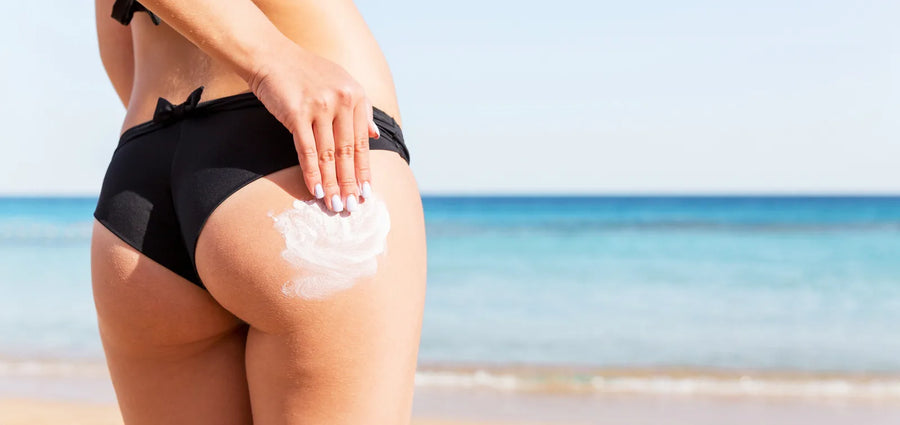
Anti-cellulite leggings: care while you move
GUAM FIR leggings have bioactive mineral crystals in the yarn that return body heat as far infrared warmth, plus algae microcapsules that release seaweed actives through contact with the skin.
The leggings do not replace the wrap, but they keep its effect going between sessions with no extra effort. Wash at 40C maximum, with no fabric softener and no tumble dryer, which wear out the microcapsules.
Massage oil: daily drainage
An anti-cellulite massage oil with upward strokes on the thighs and legs supports lymphatic drainage and reduces the fluid that makes cellulite look worse. Use after showering, 3 to 5 minutes per leg, at least 3 times a week.
Oil will not remove cellulite on its own, but it visibly smooths the legs by reducing the water-retention layer.
How Long Does It Take to Get Rid of Cellulite on Legs?
| Stage | What to do | What to expect |
|---|---|---|
| Weeks 1 to 2 | 4 to 6 wraps + daily cream | Lighter legs, visible smoothing on the back of the thighs |
| Weeks 3 to 4 | Finish the 12-wrap course | Clear reduction in dimples on outer and back thighs |
| Weeks 5 to 12 | Daily cream, inner thigh cream, leggings | Inner thighs catch up; skin feels firmer |
| Maintenance | 1 to 2 wraps a week + daily cream | Keeps results; without it, cellulite returns in 4 to 6 weeks |
Without maintenance, fluid retention and slow microcirculation come back within 4 to 6 weeks, and so does the dimpling. The leggings are the lowest-effort way to keep results.
Cellulite on Legs During and After Pregnancy
Cellulite during pregnancy is a different situation. Higher progesterone promotes fluid retention and fat storage in the lower body, and the growing uterus presses on the pelvic veins, slowing circulation from the legs. Mild cellulite often becomes more visible in the second and third trimester.
During pregnancy, skip wraps, strong heat and high-dose essential oils; gentle massage helps. The Inthenso Mom range is made for pregnancy and breastfeeding and eases heavy, swollen legs. Once breastfeeding is over, the full routine (wrap, daily cream, leggings) is fine to use, and skin still remodeling after pregnancy often responds faster than long-standing cellulite.
Shop GUAM Seaweed Body Wraps
The seaweed mud wraps behind our 2024 clinical study: hot, cold and no-heat formulas for cellulite on legs, thighs and buttocks.
Shop body wraps →Frequently Asked Questions About Cellulite on Legs and Thighs
How do you get rid of cellulite on your legs fast?
Drain the fluid first. A seaweed mud wrap pulls retained fluid from the tissue, and many women see smoother legs after the first session. For real smoothing: 2 to 3 wraps a week plus a daily cream with upward massage.
Why do I have so much cellulite on my thighs?
The thighs have the most vertical fat chambers and lower circulation than other areas, and estrogen stores fat there. Hormones, weight change and age make it worse. Slim, active women get thigh cellulite too.
Does cellulite on legs go away with exercise?
Not on its own. Exercise tones the muscle and helps circulation, but it does not repair the collagen bands or drain trapped fluid. It works best combined with a wrap, a daily cream and massage.
What is the best treatment for cellulite on legs?
A seaweed mud wrap with FIR warmth, used 2 to 3 times a week with a daily anti-cellulite cream. In a 2024 study, 8 GUAM FIR wraps in 4 weeks cut cellulite nodules by 81%.
How do you get rid of cellulite on the inner thighs?
Use a gentle firming cream made for thin skin, like GUAM Body Firming Cream for Inner Thighs and Arms, with upward strokes from knee to groin every day. Inner thighs are slowest: allow 8 to 12 weeks.
Why do I have cellulite on my calves?
True cellulite on the calves is less common. Puffy calves are often fluid retention: if a finger press leaves a dent, it is fluid. Walking, raising your legs and draining massage help. See a doctor if one leg swells.
How do you get rid of cellulite on the back of your legs?
Break up long sitting, massage upward from the knee, and use a seaweed mud wrap 2 to 3 times a week. The back of the thighs is usually the first area to look smoother, often within 4 to 6 wraps.
Can you get rid of cellulite on legs naturally?
You can visibly reduce it. Seaweed mud, rich in iodine, magnesium and calcium, drains fluid and boosts circulation without needles or surgery. Consistency matters: results fade without maintenance.
The Bottom Line
Cellulite on legs is structural: weak collagen bands, slow microcirculation and trapped fluid, not just fat. That is why diet and exercise alone rarely fix it. A seaweed mud wrap 2 to 3 times a week with a daily cream gives visible smoothing in 2 to 3 weeks, starting with the back of the thighs. The inner thighs need a gentler cream and 8 to 12 weeks; puffy calves are often fluid.
Sources
- Amuso D, et al. FIR seaweed mud for cellulite. Journal of Cosmetic Dermatology, 2024. doi.org/10.1111/jocd.16268
- Insights into the pathophysiology of cellulite: a review. Dermatologic Surgery, 2020. journals.lww.com
- Cellulite pathophysiology and treatment, review. PubMed 20865236
- Smalls LK, et al. Effect of weight loss on cellulite: gynoid lipodystrophy. Plastic and Reconstructive Surgery, 2006. PubMed 16874227
TAGS:
